Part 2. Conquest, Suppression, and Syncretism
Important Disclaimer: This series explores the historical and cultural context of psychedelic substances. The information presented is for educational purposes only and doesn't count as medical advice or an endorsement of any particular substance or practice. Always talk to qualified professionals about health issues. Compassion Retreats encourages safe, legal, and intentional exploration within appropriate contexts.
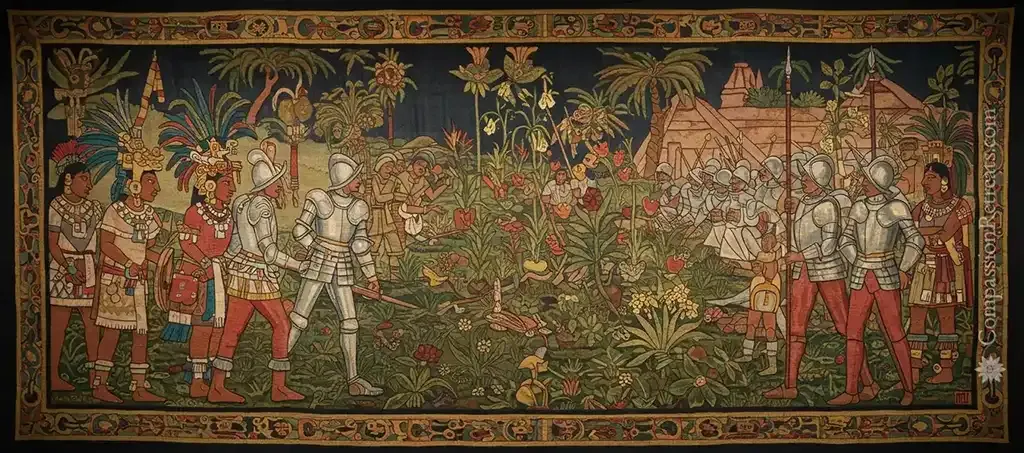
When the Spanish arrived in the early 16th century, it was a violent break in Mexico's long history of using psychoactive plants. Armed with Catholic teachings and big imperial goals, the colonizers ran into practices that were totally foreign and threatening to how they saw the world.
Pretty quickly, Spanish missionaries and writers started documenting the use of substances like peyote, teonanácatl, and ololiuqui. People like Fray Bernardino de Sahagún, whose Florentine Codex gives us super detailed accounts of Aztec life, including mushroom ceremonies, actually preserved this knowledge even while condemning the practices. Sahagún described Indians eating mushrooms with honey, having visions, dancing, crying, and consulting them for healing and fortune telling. Fray Toribio de Benavente Motolinia gave a much darker account, talking about users seeing snakes, feeling worms eating them, and sometimes hanging themselves in despair. He called the mushrooms a "bitter food" for communicating with demons.
This idea—of framing indigenous psychoactive use as devil worship, idolatry, and witchcraft—became the main colonial viewpoint. They drew parallels with European witch-hunt stories, linking drugs to demonolatry. The visions people experienced weren't seen as spiritual insights, but as tricks from demons. This hostile way of looking at things justified systematic suppression. The Spanish Inquisition, which was set up in Mexico (New Spain), actively persecuted traditional healers. Peyote was officially banned by the Inquisition in 1620, which led to tons of trials over the next few centuries. Using Teonanácatl and ololiuqui was targeted the same way. This persecution, plus priests deliberately burning indigenous codices to get rid of "paganism," drove many traditional practices underground, hiding parts of their history.
But, suppression never worked completely. The resilience of cultural traditions, sometimes helped by being far away—like the Wixárika retreating into the Sierra Madre Occidental or practices sticking around in Oaxaca's remote mountains—allowed knowledge and rituals to survive. They were passed down through generations of healers and community members.
Also, a really interesting blending process happened, mixing indigenous beliefs with parts of the Catholic faith that was forced on them. Part of this was a survival plan. It let indigenous people keep parts of their worldview "hidden in plain sight" by linking their gods to Catholic saints, or by mixing Christian prayers and symbols into their rituals. For example, Mazatec veladas often feature Catholic saint images and the Virgin of Guadalupe right alongside traditional things like copal incense and tobacco. Some folks think that the worship of the Virgin of Guadalupe at Tepeyac hill covers up older Aztec worship of the mother goddess Tonantzin there. Curanderismo, Mexican folk healing, clearly mixes indigenous plant knowledge and ritual with Catholic spirituality. This blending wasn't just hiding; it was a dynamic cultural adjustment, creating new, unique spiritual ways of life. Even the Spanish sometimes got involved, with records of colonists using peyote or hiring indigenous healers, which only made things more complicated. Authorities viewed this blending suspiciously, often calling it heresy, yet it stuck around.

It's interesting that some colonial authorities could tell the difference, allowing or even incorporating certain "rational" non-psychoactive medicinal plant uses like peyote (for example, treating wounds, bites, or pain topically; or low-dose preparations as heart tonics listed in official books into the 19th and early 20th centuries), while condemning the visionary uses. This more complex view might have accidentally created room for the plants, if not their full traditional use, to keep going more openly. The crash of two worlds didn't result in simple wiping out, but in a complicated layering of suppression, hidden persistence, and creative cultural mixing that shaped things for hundreds of years.
Next: Whispers from Oaxaca: The West 'Discovers' Sacred Mushrooms
Previous: Psychoactive plants in pre-Columbian Mexico
Sources for this article
- Hallucinogenic drugs in pre - Columbian Mesoamerican cultures - PubMed
- Teonanácatl and Ololiuqui, two ancient magic drugs of Mexico - unodc
- THE TEONANACATL - Estudios de Cultura Náhuatl
- Old Uses of Peyote in Traditional Mexican Medicine and its Inclusion in Official Pharmacopeia - Chacruna
- Indigenous psilocybin mushroom practices: An annotated bibliography in: Journal of Psychedelic Studies Volume 8 Issue 1 (2024) - AKJournals
- Psychoactive and other ceremonial plants from a 2,000 - year - old Maya ritual deposit at Yaxnohcah, Mexico - PMC - PubMed Central
- Peyote and Diabolism in New Spain - Early Modern History in 28 Objects
- Religious Syncretism in Colonial Mexico City - OER Project
- [Syncretism and the Tzeltal Rebellion - Esther M. Zimmer Lederberg, )/Tzeltal%20Rebelion.html](http://www.estherlederberg.com/Eugenics%20(Mayr)
- Mazatec Shamanic Knowledge and Psilocybin Mushrooms - Chacruna
- The syncretism Problem in Catholicism - Reddit
- El curandero actual: Preserving Indigenous Identity through Mexican Folk Healing's Chants - ShareOK
Explore meaningful journeys grounded in respect and safety, Psilocybin journeys in Tulum