Part 5: The Mind-Body Symphony - How Mental & Spiritual Wellness Affect Physical Health
We've checked out the ancient roots of well-being, defined spirituality and psychology, and seen how integrating them boosts mental wellness, while also looking at the ethical nuances. Now, let's look at the most fascinating part: the powerful link between our minds and our physical bodies.
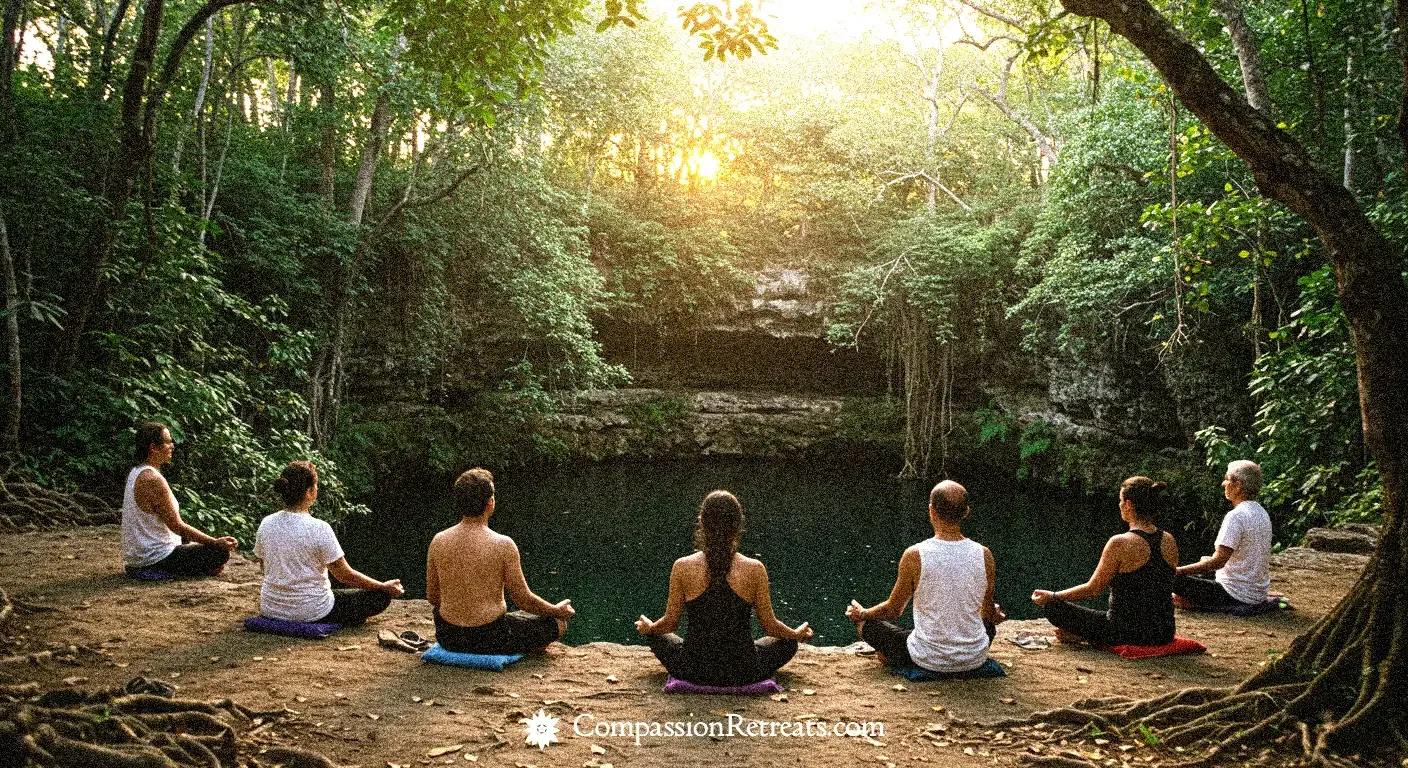
It's an old idea, one echoed in many spiritual traditions and increasingly supported by modern science: our mental and spiritual states can really impact our physical health. At Compassion Retreats, we believe that taking care of your inner world through practices like meditation, mindfulness, or even deeper journeys at our spiritual retreats in Tulum, Mexico, is an investment in your entire self—your mind, your body, and your spirit.
Psychoneuroimmunology (PNI): Science Unveils the Mind-Body Link
There's even a whole science field just for this connection: Psychoneuroimmunology (PNI). It studies how our psychological processes, nervous system (our brain), and immune system all talk to each other. For a long time, people thought the brain and immune system were separate, but PNI shows they're constantly communicating.
This research clearly shows how "negative" states, like chronic stress, can mess up this network. This can impact conditions like heart disease, cancer, asthma, and even depression. But the exciting part is that PNI also looks at how "positive" feelings and behaviors can help this network. Feeling happy, having a sense of purpose (what some call eudaimonic well-being), staying active, and getting enough sleep are all linked to a healthier immune system, including less inflammation. Inflammation is a major factor in many physical and mental health problems, so this is a big deal.
How does this work?
- Reduced Inflammation: Positive feelings and feeling like life has meaning are linked to lower levels of inflammatory markers in our bodies.
- Healthier Gene Expression: A sense of purpose is even connected to healthier patterns of gene expression, especially those related to inflammation and antiviral responses.
- Brain Health: Positive states and practices like mindfulness might even influence immune cells in our brain and the health of the blood-brain barrier. This can affect our mood and thinking.
Even participating in religious or spiritual activities, which often boost mental health and social support, is thought to positively affect immune function, possibly leading to a longer life.

How Spiritual Practices Impact Our Physiology
Specific spiritual practices, like meditation, prayer, and mindfulness, have measurable effects on our bodies:
Meditation and Mindfulness: These practices involve paying attention and staying aware without judgment.
- Stress Reduction: They turn on our body's relaxation response, which fights the "fight-or-flight" stress mechanism, and can lower cortisol (the main stress hormone).
- Lower Inflammation: Mindfulness meditation has been found to reduce inflammatory markers like C-reactive protein (CRP). It can even lead to healthier gene expression related to inflammation.
- Heart Health: Doing meditation regularly can significantly lower blood pressure and improve heart rate variability (HRV), which is a sign of good heart health and nervous system balance.
- Immune Function: While more research is always helpful, the stress-reducing effects of meditation likely help create a healthier immune response.
Prayer: Talking to a higher power or sacred presence can also bring physical benefits.
- Stress & Anxiety Relief: Prayer can encourage gratitude, focus, and comfort, helping to reduce stress.
- Brain Changes: Brain scans show clear differences in brain activity when someone is praying.
General Spiritual Engagement: Being involved in spirituality or religion more broadly is also linked to:
- Improved Immune Function: Possibly because of positive emotions and social connection.
- Better Heart Health: A lower risk of high blood pressure and heart disease.
- Longevity: A strong sense of spiritual well-being is linked to living longer, maybe because of healthier habits and strong social networks built through spiritual activities.
These practices, by encouraging calm, positive emotions, and meaning, directly influence how our body works on the inside. This is why practices like sound healing or guided meditation are often part of whole-person healing retreats.

The Two-Way Street: Mind Influences Body, Body Influences Mind
The connection isn't just one way. Our mental and spiritual well-being affects our physical health, and our physical health, in turn, affects our mental state.
From Mental/Spiritual Wellness to Physical Health:
- Stress Reduction: Less stress means less strain on your body, helping to prevent stress-related illnesses.
- Immune Boost: Positive emotions and spiritual practices can strengthen your immune system.
- Heart Benefits: Calmness and practices like meditation directly support your heart and blood vessels.
- Healthier Choices: Feeling good mentally and spiritually often motivates you to adopt healthier lifestyle habits.
- Pain Management: Mindfulness can change how we perceive and react to chronic pain.
- Cellular Impact: Some people believe that our thoughts and emotions can even affect our health at the cellular level.
From Physical Health to Mental Wellness:
- Chronic Illness Impact: Long-term physical sickness can understandably lead to stress, anxiety, and depression.
- Exercise Boost: Being physically active is a well-known mood-lifter.
- Nutrition Matters: What we eat directly affects our brain health and mood.
- Sleep is Key: Getting good sleep is vital for both physical and mental recovery.
Knowing about this powerful connection is why truly whole approaches, like those we teach at Compassion Retreats, address mind, body, and spirit all together. Taking care of your inner world isn't just good for your soul; it's a powerful way to support your physical energy, too.
Sources for this article
- Understanding Spirituality and Mental Health | McLean Hospital, [](https://www.mcleanhospital.org/essential/spirituality
- Religious and spiritual interventions in mental health care: a ..., [](https://pmc.ncbi.nlm.nih.gov/articles/PMC4595860/
- The Science Behind Flourishing: How Psychology And Spirituality Align - UEF Foundation, [](https://www.uef.org/the - science - behind - flourishing - how - psychology - and - spirituality - align/
- What is Spiritual Psychology | Meridian University, [](https://meridianuniversity.edu/content/what - is - spiritual - psychology
- Cultivating a healthy neuro - immune network: A health psychology ..., [](https://pmc.ncbi.nlm.nih.gov/articles/PMC10062207/
- The Connection between Psychoneuroimmunology and Religion - Scholars@Duke, [](https://scholars.duke.edu/individual/pub1094069
- The Benefits of Mindfulness Meditation for Heart Health, [](https://camorristown.net/the - benefits - of - mindfulness - meditation - for - heart - health/
- Nurturing the Soul: The Vital Link Between Spiritual Health and ..., [](https://woodlawnhospital.org/nurturing - the - soul - the - vital - link - between - spiritual - health - and - physical - well - being/
- Spiritual practices and mental well - being: A quantitative study among university students, [](https://wjarr.com/sites/default/files/WJARR - 2024 - 3141.pdf
- 12 Science - Based Benefits of Meditation - Healthline, [](https://www.healthline.com/nutrition/12 - benefits - of - meditation
- Mindfulness and Cardiovascular Disease Risk: State of the Evidence, Plausible Mechanisms, and Theoretical Framework - PubMed Central, [](https://pmc.ncbi.nlm.nih.gov/articles/PMC4928628/
- Mental Wellness Redefined: The Science of Flourishing, [](https://www.mentalwellbeingassociation.org/blog/mental - wellness - redefined
- Physical and Mental Health Outcomes of Integrated Care ..., [](https://www.researchgate.net/publication/388964975_Physical_and_mental_health_outcomes_of_integrated_care_Systematic_review_of_study
Experience the profound connection between your mind, body, and spirit. Discover our transformative wellness retreats in the Riviera Maya.