Psilocybin mushrooms are a controlled substance under Mexican federal law and the Federal Penal Code sets penalties for possessing and using them. Article 195 bis of that code exempts possession and use inside traditional indigenous ceremonies. Outside that exemption the statutes give no clean answer. For a visitor booking a retreat, psilocybin sits in a grey area rather than in a legal one.
Last checked 18 October 2026. We read the law again every quarter and change this date when we do, whether or not anything has moved. If something here is out of date, write to us and we will correct it.
This piece sits in our writing on psilocybin and psychedelic work.
What does the law say in plain terms?
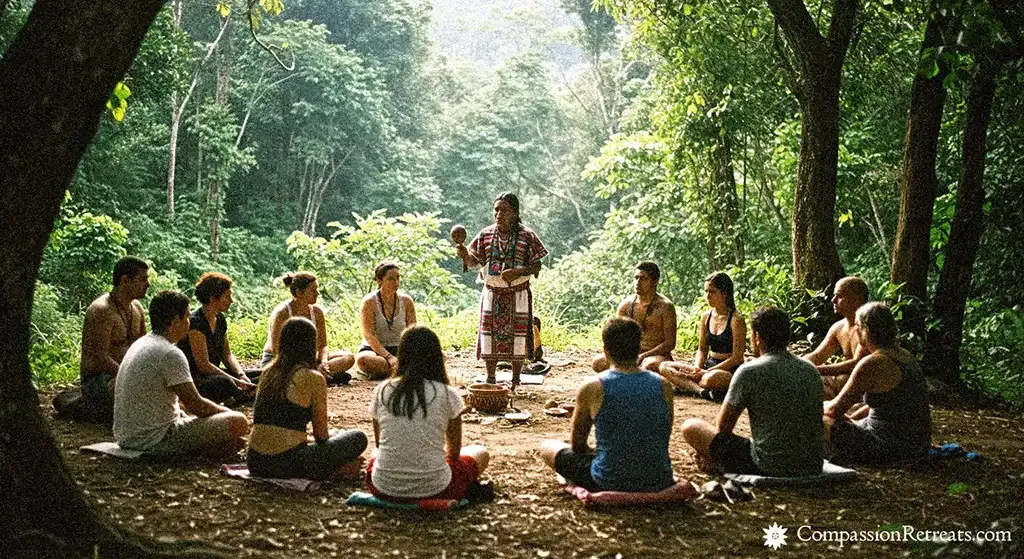
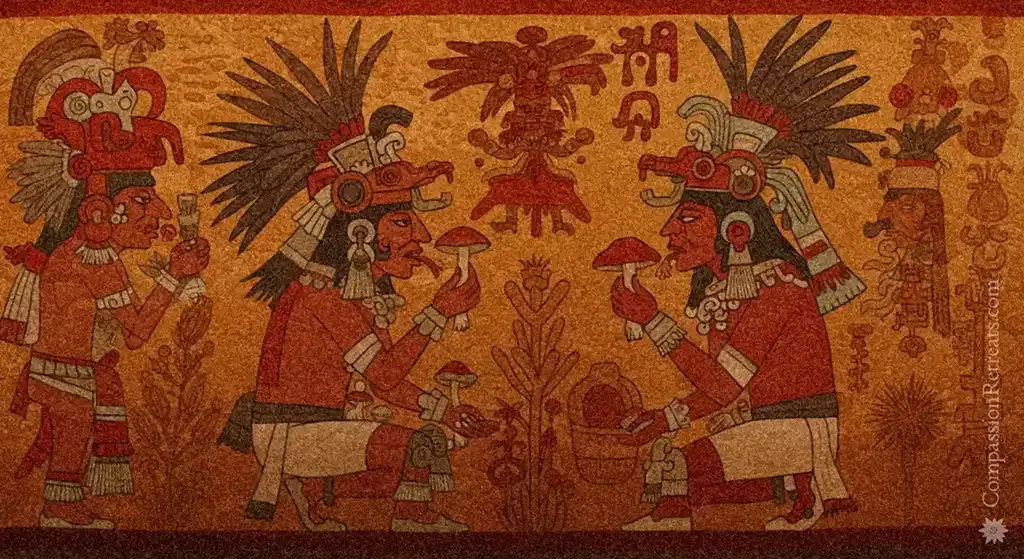
The Ley General de Salud lists psilocybin mushrooms among substances subject to special controls. The Federal Penal Code sets out the penalties. Article 195 bis exempts indigenous people who possess or use them inside traditional ceremonies or customs.
That exemption is narrow. It protects ceremony and the communities who kept the practice. It was not written for tourism, and it does not extend to a booking made by a visitor from abroad.
There is no permit regime for psilocybin retreats in Mexico. Enforcement differs between states and between cases. For a visitor, the honest summary is short. Psilocybin in Mexico is a grey area, and you plan on that basis.
What does a grey area mean for a visitor?
It means nobody can promise you that the law will not apply to you. A house that promises otherwise is promising something it cannot know.
It also means people do travel for this work and come home without incident. That is true, and it is not a guarantee. It tells you what has happened to other people, not what will happen to you.
Ask the house directly what its legal basis is, and listen for a specific answer rather than a comfortable one. Compassion Retreats says this on the call rather than in small print. The psilocybin session here is optional and paid separately, and the days are complete without it. The screening call is where we work out together whether this work is right for you at all.
Read the law before you travel. It is public and it is short. Then decide what risk you are willing to carry, because that decision is yours. It should not be made for you by anyone selling a week.
What about the other substances people travel for?
Each substance people travel for sits in a different place in Mexican law. Only the mushrooms have an exemption written into the code.
Ketamine is legal in Mexico for medical use and is used clinically in some settings. Ibogaine is largely unregulated, and that absence is part of why some centres build their work around it.
Peyote is controlled in the same way as psilocybin, and the IUCN lists it as vulnerable. Ayahuasca and 5-MeO-DMT contain compounds that are scheduled outright, which puts them in a different position from the mushrooms.
What should I ask before I pay anyone?
Ask what the legal position is and expect a straight answer that names the grey area. Ask who holds the work and what they trained in. Ask what happens if the law changes before your dates arrive, and what the cancellation terms are if it does.
Compassion Retreats runs a screening call before anything is confirmed, takes a confidential intake per person, and holds a preparation call before travel. Money moves after that, not before. The questions worth asking any operator are set out in full in our guide to choosing a psilocybin retreat. The general version, for any kind of house, is in how to choose a retreat safely.
The position at a glance
| Item | Position |
|---|---|
| Psilocybin mushrooms | Controlled under the Ley General de Salud, with penalties for possession and use |
| Indigenous ceremonial use | Exempt under Article 195 bis of the Federal Penal Code |
| A visitor booking a retreat | A grey area. No clean answer in the law and no permit regime for operators |
| Peyote | Controlled in the same way and listed as vulnerable by the IUCN |
| Ayahuasca and 5-MeO-DMT | Compounds scheduled outright |
| Ketamine | Legal for medical use |
| Ibogaine | Largely unregulated |
| Last checked | 18 October 2026. Reviewed quarterly |
Where this work happens
The psychedelic integration retreat runs three to five days for one party at a time, with the screening call first and the two integration calls after you go home. The one-day experience at US$450 per person is the smallest step into the house, and it commits you to nothing larger.
Sources for this article
- Artículos 244 al 256 [Substancias Psicotrópicas] - Ley General de Salud (LGS) - Justia México
- Código Penal Federal, Artículo 195 bis - Justia México
- Psychedelics in Mexico - Blossom Analysis
Read the law, then decide. If you want to ask us how we work inside that grey area, write to us and we will set up the screening call. The wider picture, including the pressure tourist demand puts on the communities who kept these practices, sits in psychedelics in Mexico today.