Mexican federal law places psilocybin mushrooms and peyote under control and sets penalties for possession and use. One exemption, Article 195 bis of the Federal Penal Code, covers possession and use inside traditional indigenous ceremonies. Outside that exemption the law gives no clear answer to retreats or to visitors, and psilocybin sits in a grey area. Compassion Retreats screens every guest on a call before confirming a booking.
This is part of our writing on psilocybin and psychedelic work.
What does Mexican law say about psilocybin?
Federal drug law lists psilocybin mushrooms among controlled substances and the Federal Penal Code sets penalties for possession and use. Article 195 bis of that code exempts indigenous people who possess or use them inside traditional ceremonies or customs. For anyone else the statutes give no clean answer.
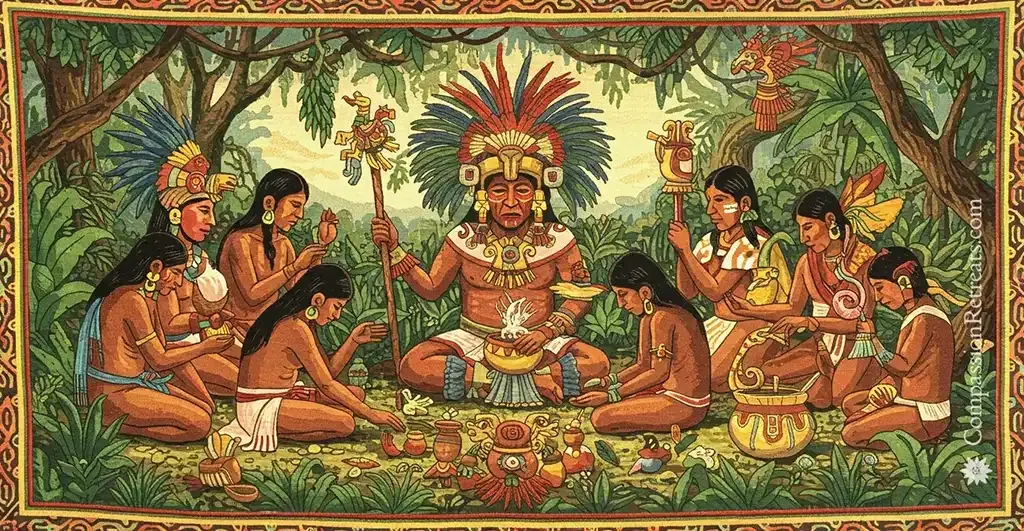
The exemption grows out of Mexico's constitutional recognition of indigenous cultures and it lines up with the country's international commitments. It protects ceremony. It was not written for tourism and it does not extend to a retreat booking made by a visitor from abroad.
There is no permit regime for psilocybin retreats in Mexico. Enforcement differs between states and between cases, and most operators work without a clear legal basis. Ketamine stays legal for medical use and ibogaine is largely unregulated, which is why some centres build their work around those two instead.
For a visitor the honest summary is short. Psilocybin in Mexico is a grey area. Plan on that basis and ask direct questions before you pay anyone.
What is happening to Wixárika land and to the peyote?
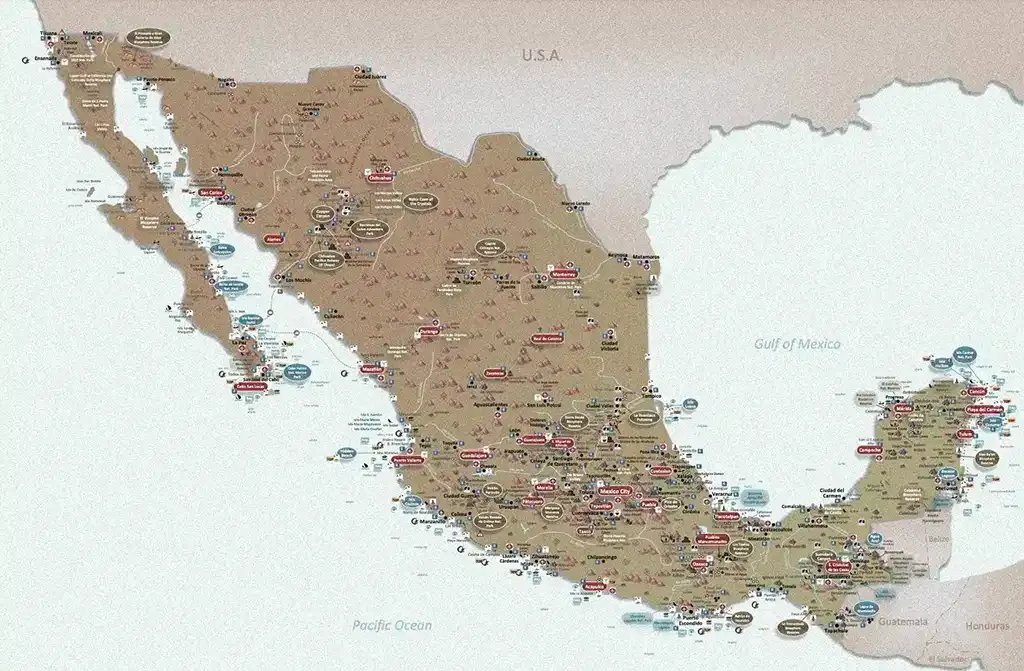
The Wixárika walk to Wirikuta every year, the desert in San Luis Potosí where they say the sun was born. Mining concessions overlap that land and the community's legal challenges have run for thirteen years. The IUCN lists peyote as vulnerable.

The walk covers hundreds of kilometres and the mara'akame lead rituals along the way. In Wirikuta the first cactus is ritually hunted as Tamatsi Kauyumari, the Blue Deer. Harvesters cut only the button and leave the root so the plant grows back.
Peyote grows slowly. A plant takes 10 to 15 years to mature and pulling the whole plant ends it. Outsiders do exactly that. Wixárika pilgrims report walking farther each year to find enough.

Large-scale farming around the desert adds deforestation to the pressure. The land carries the community's ceremonies and it also carries the plant.
What does the tourist trade do to the traditions?
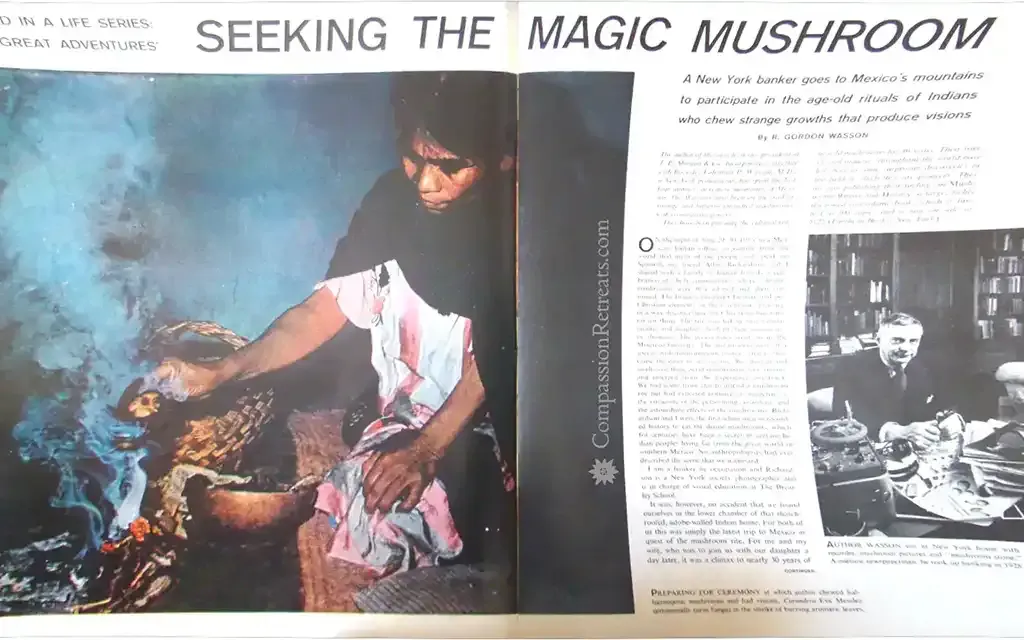
Demand has built an industry around ceremonies that once served villages. The people selling them are not always connected to the traditions they borrow. The pressure falls on the plants and on the communities.
Critics inside the psychedelic world name the pattern as cultural appropriation. Sacred rituals get stripped of their meaning and sold as entertainment, and the money moves outward instead of to the communities that kept the knowledge. Mazatec voices have said this plainly in print.

Some operators present themselves as shamans and work only with visitors. Demand drives unsustainable harvesting and the peyote numbers show it. Calls to decolonise the field ask for two things. Benefits should flow back to the communities and indigenous self-governance should be respected.
How does Compassion Retreats work inside this picture?
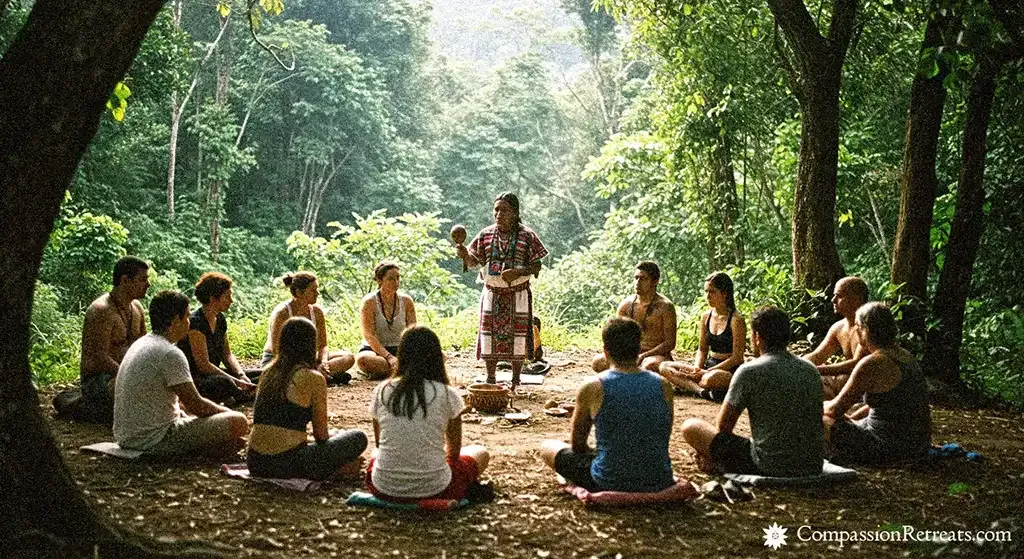
Compassion Retreats is a private house in the jungle outside Tulum and takes one party at a time. A screening call comes first, then a confidential intake per person covering medical and psychological background, then a preparation call before travel. The psilocybin session is optional and quoted separately, never inside a platform booking.
Parties are never mixed and no strangers share the house. On the session day one facilitator is present from the first hour until the guest is settled at night, and the session commonly runs six to eight hours. If two people come, both sit in one room on the same day.
Every booking includes two integration calls after you go home, inside the first month. The days are complete without the medicine and some guests come without it.
The picture at a glance
| Item | Position |
|---|---|
| Psilocybin mushrooms | Controlled under federal law, with penalties for possession and use |
| Peyote | Controlled in the same way and listed as vulnerable by the IUCN |
| Indigenous ceremonial use | Exempt under Article 195 bis of the Federal Penal Code |
| Retreat sessions | No clear legal framework. A grey area for operators and for visitors |
| Ketamine | Legal for medical use |
| Ibogaine | Largely unregulated |
Where this work happens
The one-day experience at US$450 per person is the smallest step into the house and it commits you to nothing larger.
The psychedelic integration retreat runs 3 to 5 days, with the screening call first and two integration calls after you go home.
Sources for this article
- Mining, peyote seekers threaten the Wixárika's centuries - old culture - Mexico News Daily
- Peyote | Oxford Research Encyclopedia of Latin American History
- Peyote | Oxford Research Encyclopedia of Latin American History
- Beading Traditions: Huichol - Museum of Beadwork
- Indigenous psilocybin mushroom practices: An annotated bibliography in: Journal of Psychedelic Studies Volume 8 Issue 1 (2024) - AKJournals
- The Wixárika community's thirteen - year legal battle to stop mining in their sacred territory
- Wixarika medicine under siege - The Esperanza Project
- Psychedelics in Mexico - Blossom Analysis
- Psychedelics in the Global South: Relevance and Consequences of the Countercultural Movement in Mexico - Chacruna
- Mazatec Perspectives on the Globalization of Psilocybin Mushrooms - Synergetic Press
- Ethical Concerns about Psilocybin Intellectual Property - PMC
- Legal status of psilocybin mushrooms - Wikipedia
The wider picture on psilocybin work sits in the psilocybin and psychedelic work hub. If you are weighing a booking with us, the next step is the screening call. Nothing is confirmed before that call happens. Write to us with your questions and we will arrange it.