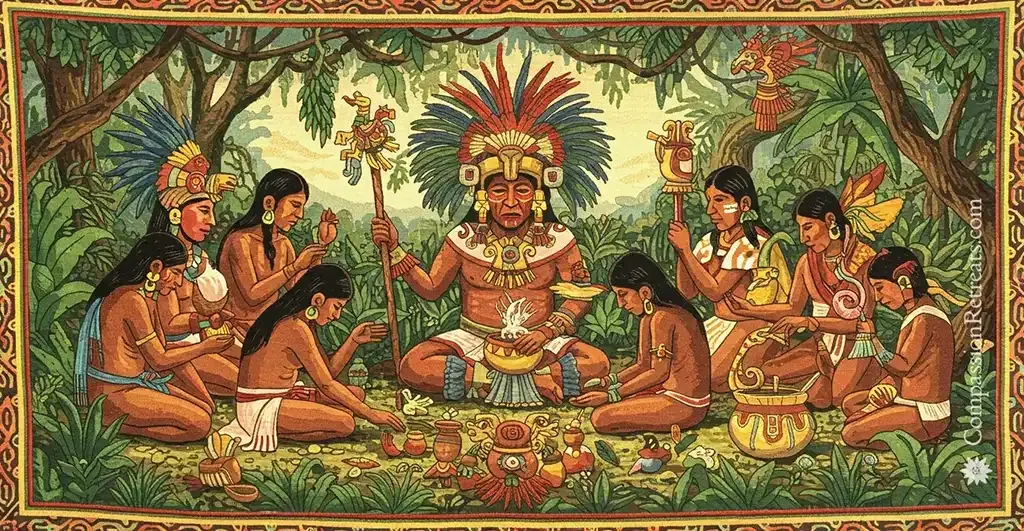
For more than three thousand years the peoples of Mesoamerica used psychoactive plants and fungi as tools of medicine and religion. Priests and ritual specialists used peyote, teonanácatl, ololiuqui and tobacco for divination and for rites, and evidence of peyote use goes back over 5,000 years. Compassion Retreats is a private house outside Tulum where this plant work is held today.
This is part of our writing on psilocybin and psychedelic work.
What did Mesoamerican cultures use these plants for?
They were given as medicine and used in ceremony. People consulted them for divination and for word from gods and ancestors. The work had rules around it, and the people who did it trained for years.
Rituals took several shapes. Some ran as group ceremonies with a whole community present and some ran alone, with one specialist working as the go-between to the other world. The Aztec kept people for this work. The tlamacazqui led the rites and the ticitl worked with the plants as medicine.
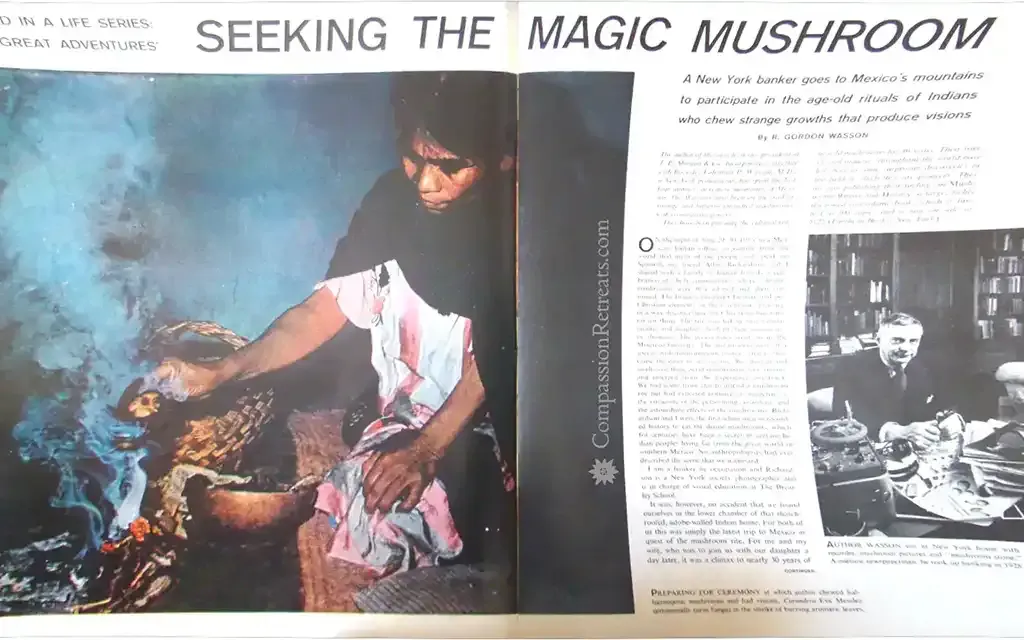
Some rites asked for fasting beforehand. Others used the plants to blunt pain during bloodletting and self-sacrifice. The mushrooms were eaten fresh and often with honey or chocolate, which takes the bitter edge off.
The plants were not treated as raw material. People read their effects as voices from gods or spirits, and each plant had a personality of its own. That is the difference between this history and the way the same plants get talked about now.

Which plants and fungi were used?
Four carry most of the record: peyote, teonanácatl, ololiuqui and balché. Wild tobacco, jimson weed, toad secretions and the water lily also appear, and the Mazatec kept Salvia divinorum for the same work.

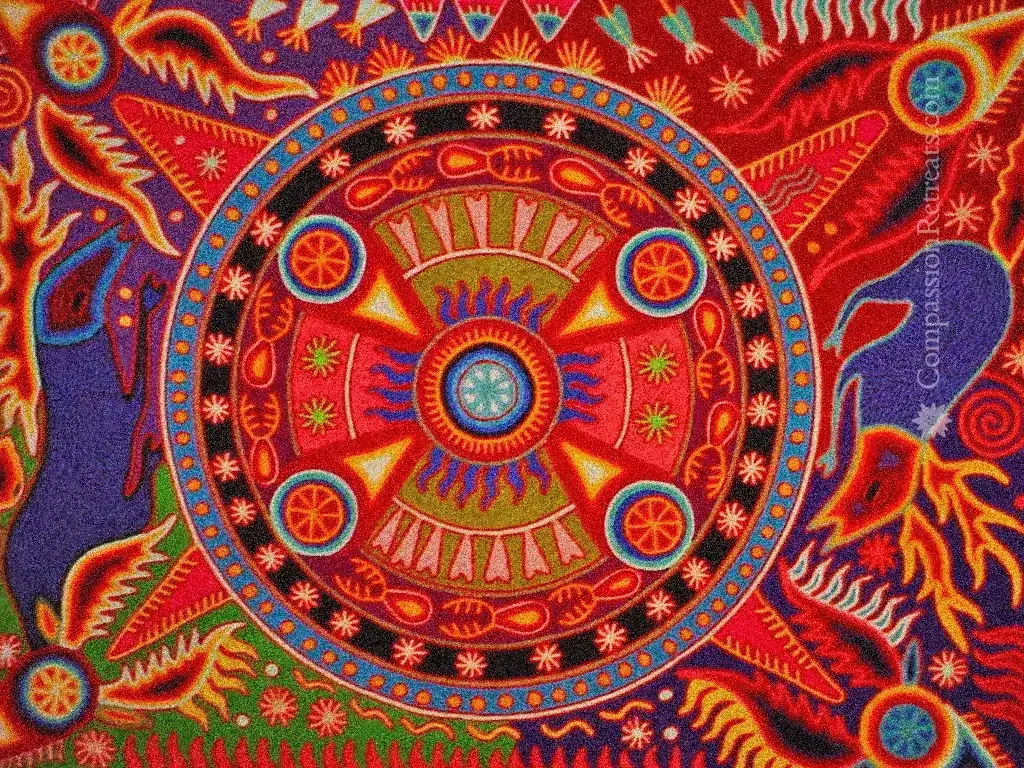
Peyote (Lophophora williamsii). This small spineless cactus holds mescaline and carries the longest documented history in the group. Evidence of its use runs back more than 5,000 years across Mexico and Texas. The Wixárika keep it central to their practice to this day. Colonial records show peyote used as medicine for fevers, headaches, wounds and rheumatism.

Teonanácatl (Psilocybe mushrooms). The Aztec name translates as flesh of the gods, which shows the respect the mushrooms carried. People ate them fresh and often with honey or chocolate. Carved stone mushrooms from Maya and Zapotec sites are read as evidence that the ritual is far older than the Aztec empire. The Maya name for them is k'aizalaj okox.

Ololiuqui (Turbina corymbosa). These morning glory seeds carry lysergic acid amides, compounds related to LSD. The Maya knew the plant as xtabentun. Colonial accounts say people consulted the seeds like an oracle and made a paste from them that dulled pain.

The rest of the cabinet. Balché was a fermented drink of honey and Lonchocarpus bark, drunk in group ceremonies. Wild tobacco (Nicotiana rustica) was smoked or chewed and sometimes mixed with other plants to push the effects further. Jimson weed (Datura) and the water lily appear in the record too. The Mazatec used Salvia divinorum when the mushrooms were not available.
What changed with the Conquest?
The Spanish Conquest broke the open practice. Missionaries recorded mushroom and peyote ceremonies in the sixteenth century and read them as dealings with the devil. The Inquisition banned peyote in New Spain in 1620.
Fray Bernardino de Sahagún put Aztec mushroom ceremonies into the Florentine Codex in the second half of the sixteenth century. He described people eating the mushrooms with honey, dancing, weeping and consulting them for what was coming. He preserved the knowledge and condemned it in the same pages.
Fray Toribio de Benavente Motolinía wrote a darker account: users seeing snakes, feeling worms under the skin and sometimes hanging themselves in despair. He called the mushrooms a bitter food for talking with demons.

Colonial thinking mapped the plants onto European witch-hunt stories. Visions were read as demon tricks and the ceremonies as idolatry. That reading justified suppression on the ground. Priests burned indigenous codices and the Inquisition tried cases against peyote and mushroom use across the next two centuries. Much of the practice went underground, which is why parts of this history were lost.
How did the ceremonies survive?
Distance and disguise kept them alive. Families in the Sierra Madre and in the mountains of Oaxaca passed the practice down through generations. Where it stayed visible it took on Catholic dress.
The mixing was deliberate in part, and historians call it syncretism. Linking gods to Catholic saints and putting Christian prayers inside the old rituals let communities keep their worldview in place under a foreign name. Mazatec veladas to this day run with saint images and the Virgin of Guadalupe set beside copal incense and tobacco.
Sahagún wrote that people in his own time still climbed the hill at Tepeyac for the mother goddess Tonantzin. The shrine of the Virgin of Guadalupe stands on that hill. Mexican folk practice, curanderismo, keeps indigenous plant knowledge and Catholic prayer in the same hands.
Colonial authorities drew a line that worked in the plants' favour. They condemned visionary use and tolerated plain medicine. Peyote for wounds and for pain stayed in official pharmacopeias into the nineteenth and twentieth centuries. The ceremonies could not survive in the open. The plants could.
Timeline
| Date | Event |
|---|---|
| More than 5,000 years ago | Oldest evidence of peyote use in Mexico and Texas |
| Sixteenth century | Sahagún records Aztec mushroom ceremonies in the Florentine Codex |
| 1620 | The Inquisition bans peyote in New Spain |
| Seventeenth and eighteenth centuries | Inquisition trials against peyote and mushroom use |
| Nineteenth and twentieth centuries | Peyote stays in official pharmacopeias for topical and tonic preparations |
Where this work happens
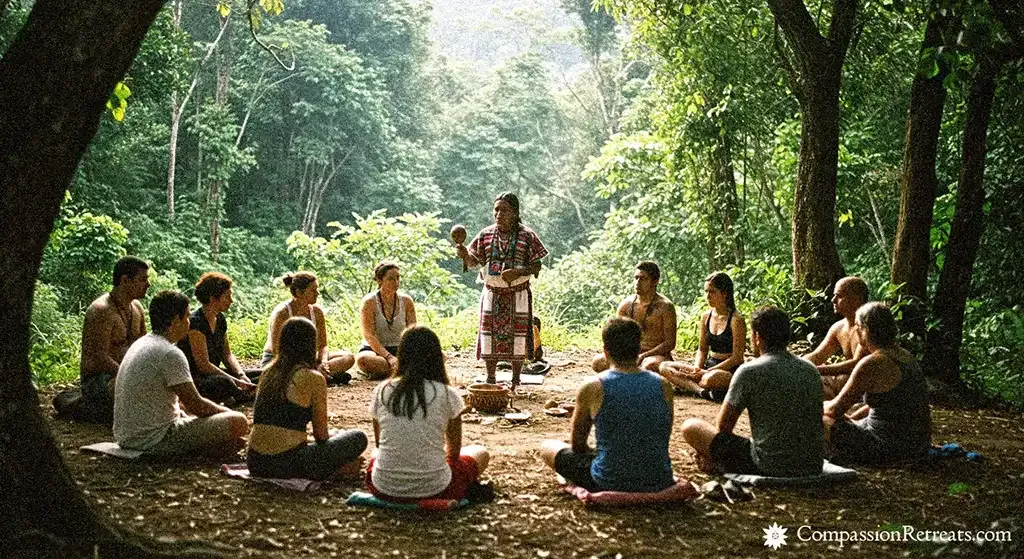
The history lands in a living house rather than a museum. Compassion Retreats holds one party at a time outside Tulum, and every booking starts with a screening call.
The psychedelic integration retreat runs 3 to 5 days and holds the optional psilocybin session between that call and two integration calls after you go home. It is where a person meets this material with help around it.
If you want to see the house first, the one-day experience at US$450 per person is the smallest step in.
Sources for this article
- Hallucinogens - USDA Forest Service
- Aztec use of entheogens - Wikipedia
- Psychoactive and other ceremonial plants from a 2,000 - year - old Maya ritual deposit at Yaxnohcah, Mexico - PMC - PubMed Central
- Hallucinogenic drugs in pre - Columbian Mesoamerican cultures - PubMed
- Teonanácatl and Ololiuqui, two ancient magic drugs of Mexico - unodc
- THE TEONANACATL - Estudios de Cultura Náhuatl
- Old Uses of Peyote in Traditional Mexican Medicine and its Inclusion in Official Pharmacopeia - Chacruna
- Indigenous psilocybin mushroom practices: An annotated bibliography in: Journal of Psychedelic Studies Volume 8 Issue 1 (2024) - AKJournals
- Psychoactive and other ceremonial plants from a 2,000 - year - old Maya ritual deposit at Yaxnohcah, Mexico - PMC - PubMed Central
- Peyote and Diabolism in New Spain - Early Modern History in 28 Objects
- Religious Syncretism in Colonial Mexico City - OER Project
- Syncretism and the Tzeltal Rebellion - Esther M. Zimmer Lederberg
- Mazatec Shamanic Knowledge and Psilocybin Mushrooms - Chacruna
- The syncretism Problem in Catholicism - Reddit
- El curandero actual: Preserving Indigenous Identity through Mexican Folk Healing's Chants - ShareOK
More of this history and the work around it sits in the psilocybin and psychedelic work hub.