María Sabina was a Mazatec curandera in Huautla de Jiménez who led mushroom ceremonies called veladas. In June 1955 she let the banker R. Gordon Wasson and his photographer Allan Richardson take part, and in 1957 LIFE magazine published his account of the night. Compassion Retreats takes one party at a time at its house outside Tulum, a deliberate break with the tourist trade this publication started.
This is part of our writing on psilocybin and psychedelic work.
Who was María Sabina?
María Sabina was a Mazatec curandera, the person who leads the velada, in the mountain village of Huautla de Jiménez in Oaxaca. She knew the chants and the order of the night work. She was poor, and this was her life.
People came to her for divination and for answers about illness. The velada runs from dusk to dawn and it has a fixed shape. She worked with the mushrooms that the Mazatec call ndi xijtho, the little ones that sprout.
Her name stayed local for most of her life. That changed in one decade, and the change was not her doing.

How did Wasson find the ceremony?
Robert Gordon Wasson was a vice president at J.P. Morgan & Co. and an amateur mycologist with an obsession. His wife, Valentina Pavlovna Wasson, grew up with wild mushrooms in Russia and wrote about them, and the contrast between her ease and his Anglo-Saxon fear of fungi set his search going.
Earlier work pointed him to Oaxaca. Richard Evans Schultes had identified teonanácatl in the 1930s, and colonial accounts showed that mushroom ceremonies had been recorded in Mexico for centuries. Wasson concluded that the practice was still alive in remote villages and went looking.
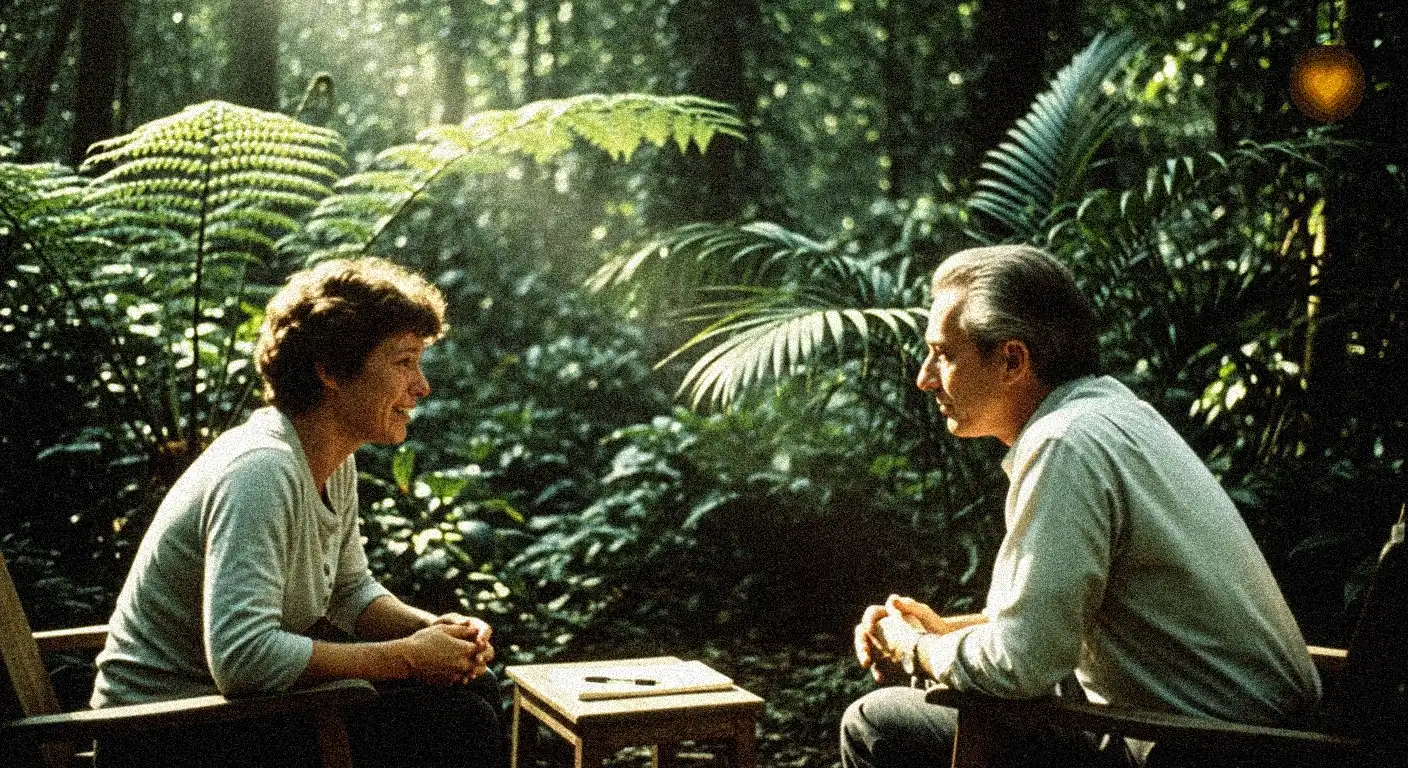
Several trips took him into the Sierra Mazateca. In June 1955, in Huautla de Jiménez, he and Allan Richardson asked María Sabina to let them take part in a velada. Accounts of how he won her trust say he told her he sought help for his son.
Wasson later claimed, and the claim has been argued over since, that they were the first outsiders in recorded history to eat the mushrooms. The wording is his. What is not in doubt is that he went home and wrote it all down.
What happened at the velada in 1955?
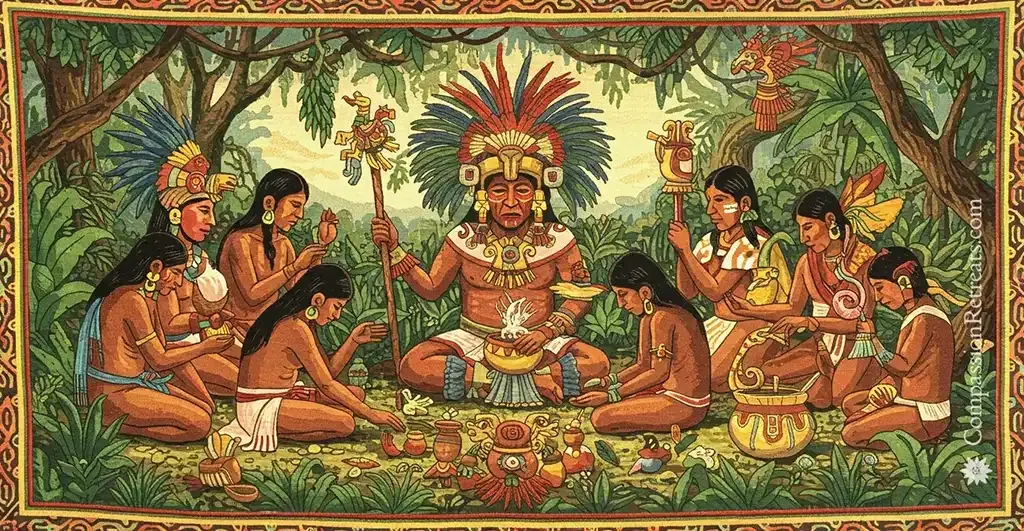
The velada is a night of work rather than a spectacle. Mushrooms are eaten in pairs and set out on a ritual table with candles, copal incense, tobacco and flowers. Mazatec chants run through the night, and they sometimes name Catholic saints beside the older words.
The purpose was divination or medicine. The chjota chjine, the person leading the night, eats the mushrooms too and works as the go-between between the people in the room and what the mushrooms show. Richardson photographed it. Wasson wrote it up.

Both men were marked by the night, Wasson badly enough that he felt obliged to tell the story. María Sabina had let outsiders into something that belonged to her village. What followed shows what that costs.
What did the LIFE article change?
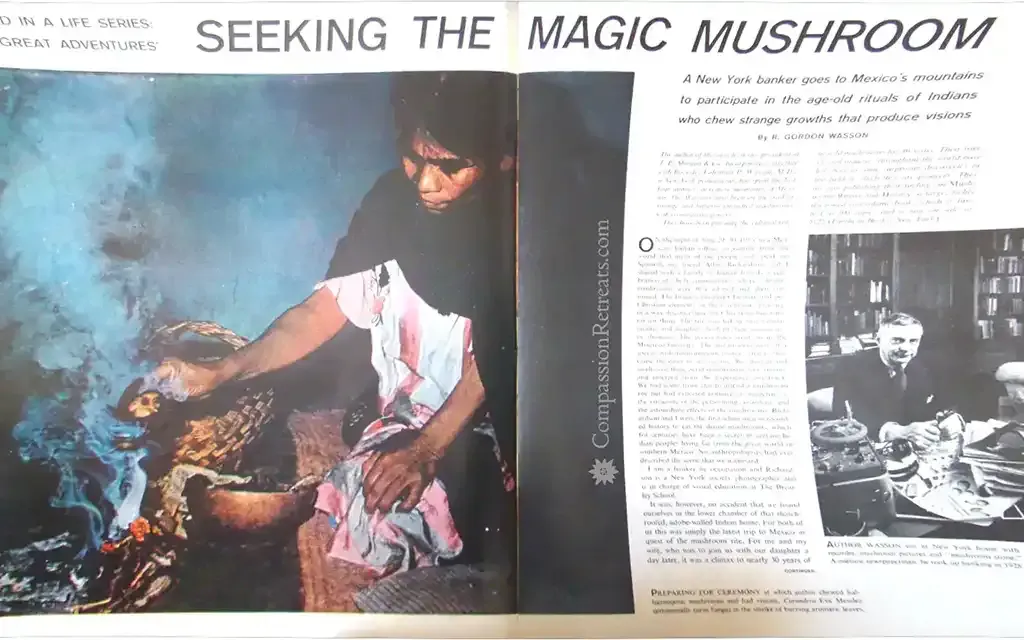
On 13 May 1957 LIFE magazine ran Wasson's account, "Seeking the Magic Mushroom", with Allan Richardson's photographs and drawings by the mycologist Roger Heim. The article named the mushrooms in English and reached an audience in the millions. It is the hinge between an ethnographic curiosity and a public phenomenon.
An editor at LIFE supplied the title "magic mushroom" against Wasson's wishes. The phrase stuck to the mushrooms and it has not come off since. Wasson's own text carried a different register. He quoted the Mazatec view of the mushrooms plainly: they carry you there where God is.
The article reached researchers as fast as it reached seekers. Timothy Leary read it before his own 1960 mushroom session in Mexico, and the Harvard work that followed kept returning to it. When people say the modern era of the mushrooms starts somewhere, this is the somewhere.
What did the attention do to Huautla?
Visitors came in numbers the village could not carry. They wanted the mushrooms and they wanted the velada, and both turned into things for sale. Village life came apart around the demand.
María Sabina took the blame. She was shut out by her neighbours, accused of selling the tradition, and her house was burned. Drug use arrived that had nothing to do with the ceremonies she knew. She lived the rest of her life with the consequences of a magazine article.
Wasson regretted the publication and so did she. Both of them said so, and it changed nothing.
Key figures
| Figure | What they did |
|---|---|
| María Sabina | Led the velada Wasson attended in Huautla de Jiménez in June 1955 |
| R. Gordon Wasson | Banker and amateur mycologist who wrote the LIFE account |
| Valentina Pavlovna Wasson | His wife, a paediatrician who wrote about Russian mushroom traditions with him |
| Allan Richardson | Photographer at the velada and in the LIFE article |
| Roger Heim | Mycologist who identified the mushrooms and drew them for the article |
| Timothy Leary | Read the article in 1957 and later put psilocybin at the centre of his work at Harvard |
Where this work happens
The velada ran on chant and on sound through the whole night. The Yoga, Sound & Meditation retreat at Compassion Retreats works with that material over 3 to 5 days and without mushrooms.
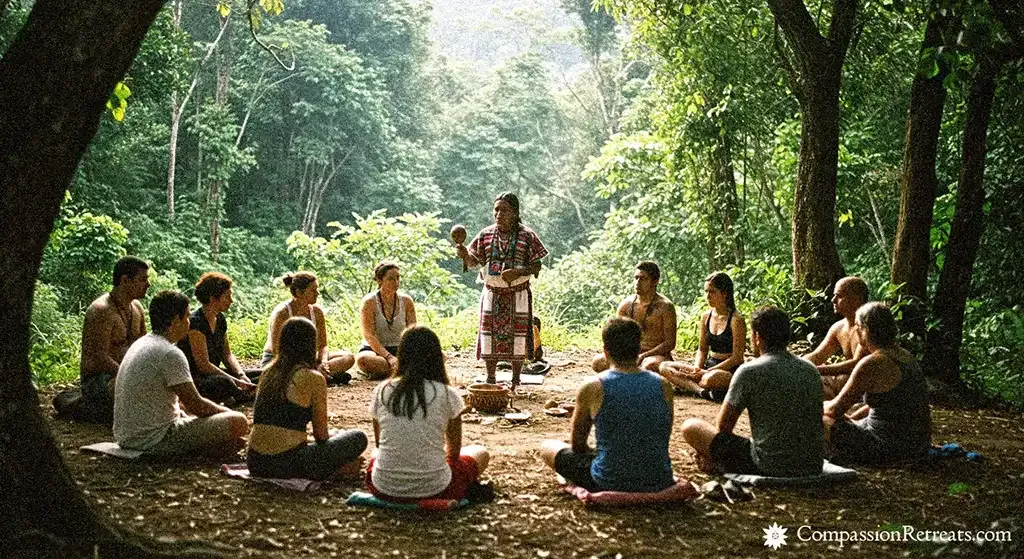
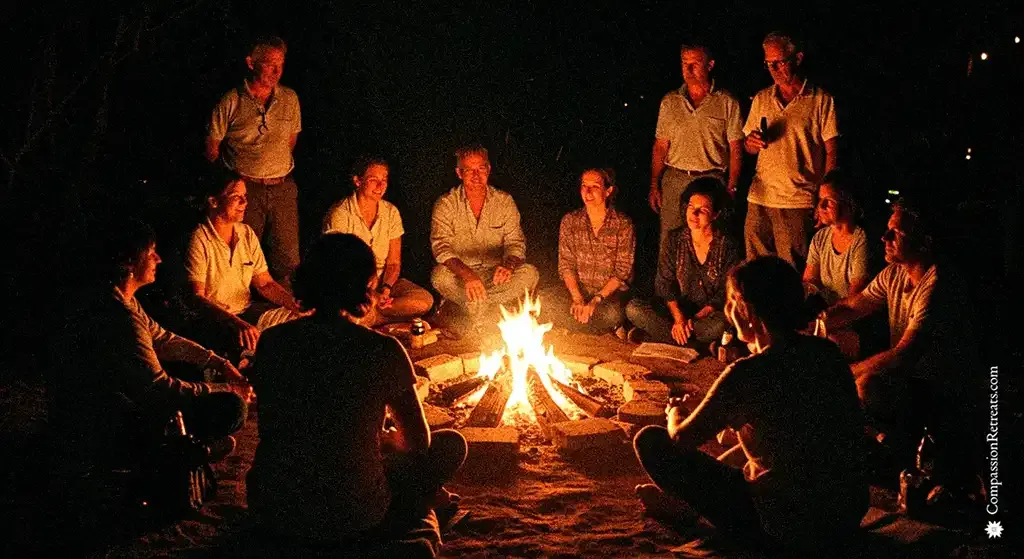
Compassion Retreats takes one party at a time and never mixes strangers in the house, which is the opposite of what arrived in Huautla after 1957. The psychedelic integration retreat holds the session between a screening call and two integration calls after you go home.
Sources for this article
- Magic Mushrooms: A History | Chelsea Green Publishing
- TEONANACATL: THE NARCOTIC MUSHROOM OF THE AZTECS2 - ResearchGate
- Huautla, hippies and hongos - The History of Emotions Blog
- Seeking the Magic Mushroom - Wikipedia
- Mazatec Shamanic Knowledge and Psilocybin Mushrooms - Chacruna
- The Impact of a 1957 LIFE Magazine Article on the Psychedelic Movement
- Sacred Stewardship: The Mesoamerican Mushroom Ceremony
- Ethical Concerns about Psilocybin Intellectual Property - PMC
The rest of this history sits in the psilocybin and psychedelic work hub.